


Your car’s battery is the electrical lifeline of your vehicle. It powers everything from the ignition system to your lights and onboard electronics. But to keep it running smoothly, you need to understand one critical number — voltage.
Knowing what voltage a car battery should be, and how to test it, helps you identify problems early, prevent breakdowns, and maintain your car’s overall performance. Let’s explore what those voltage numbers really mean and how to read them like a pro.
What Voltage Should a Car Battery Be?

A healthy, fully charged car battery should measure around 12.6 volts or higher when the engine is off.
Here’s a quick guide:
- 12.6V – 12.8V: Fully charged battery.
- 12.4V – 12.5V: 75% charged.
- 12.2V – 12.3V: 50% charged — time to recharge soon.
- 12.0V or below: Discharged or failing battery.
If your battery consistently reads below 12 volts, it may not be holding a proper charge and should be tested or replaced.
How Many Volts Is a Car Battery?

Most standard car batteries are 12-volt systems, made up of six cells, each producing roughly 2.1 volts. Combined, these cells deliver the voltage necessary to start your vehicle and power its electronics.
Some larger vehicles, trucks, or electric systems may use 24-volt configurations (two 12V batteries connected in series), but for most passenger cars, 12 volts is the standard.
A well-maintained 12V battery provides stable performance and helps protect sensitive electronics from voltage fluctuations.
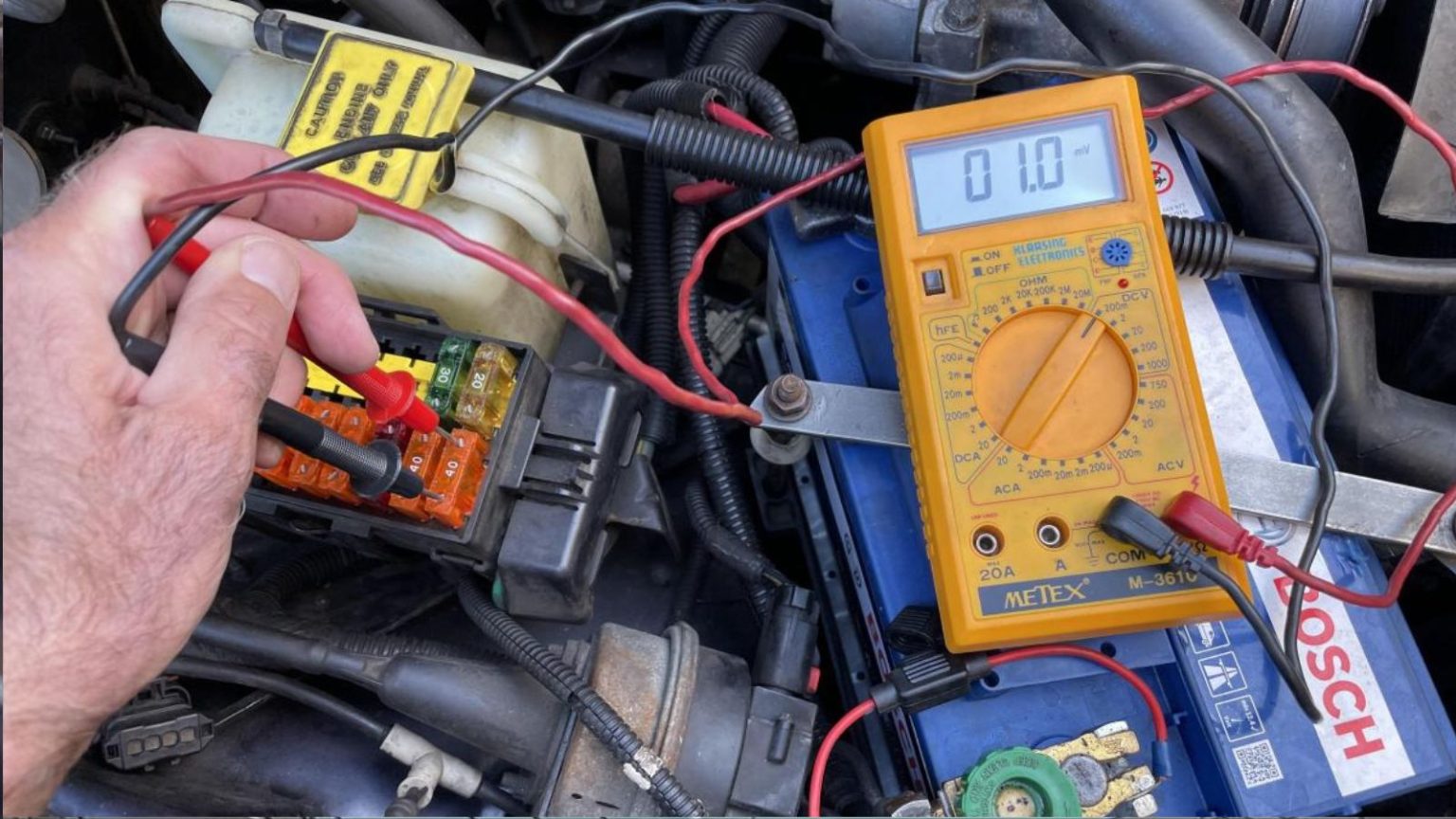
How to Check Car Battery Voltage with a Multimeter?

Testing your car battery voltage is simple and takes just a few minutes with a digital multimeter.
Step-by-step process:
- Turn off your car: Wait at least 10 minutes after shutting off the engine.
- Set your multimeter to DC volts: Choose a range that includes 20V.
- Connect the probes:
- Red to the positive terminal (+)
- Black to the negative terminal (–)
- Read the display:
- 12.6V or above: Battery is healthy.
- 12.0–12.4V: Battery is weak.
- Below 12.0V: Battery may be failing.
Testing regularly helps you track the battery’s condition before it becomes a problem.
What Voltage Means When the Car Is Off or Running?

The voltage reading changes depending on whether your car is off or running.
- Engine Off:
A fully charged battery should read 12.6V. Anything below 12.2V indicates partial discharge. - Engine Running:
When the engine is running, the alternator charges the battery, raising voltage to 13.7V – 14.7V.- Readings above 15V may indicate an overcharging alternator.
- Readings below 13V could mean the alternator isn’t charging properly.
Monitoring both states helps ensure that your charging system and battery are functioning together correctly.
How Many Amps in a Car Battery?

While voltage measures electrical pressure, amperage (amps) measures current flow — the battery’s ability to deliver power.
Car batteries vary in Cold Cranking Amps (CCA), which indicates how much current the battery can deliver for 30 seconds at 0°F without dropping below 7.2V.
- Small cars: 400–500 CCA
- Mid-size vehicles: 500–700 CCA
- Trucks or SUVs: 700–1000 CCA
Higher CCA ratings are beneficial for cold climates, where more power is needed to start the engine.
Car Battery Voltage Chart Explained

Here’s a quick voltage reference chart to understand your battery’s health at a glance:
| Battery Condition | Voltage (Engine Off) | Charge Level |
| Fully Charged | 12.6V – 12.8V | 100% |
| Good Condition | 12.4V – 12.5V | 75% |
| Weak/Recharge Soon | 12.2V – 12.3V | 50% |
| Discharged | 12.0V or below | 25% or less |
| Overcharged (Running) | 15.0V+ | Risk of Damage |
This chart gives you a clear overview of what’s happening inside your battery based on simple multimeter readings.
FAQ: Battery Voltage & Power
Q1: What should my car battery voltage be after sitting overnight?
It should be around 12.6 volts. Anything below 12.4 volts indicates minor discharge, while 12.0 volts or less signals a weak battery.
Q2: Can a car battery have good voltage but still be bad?
Yes. A battery can show normal voltage but fail under load if its internal capacity has degraded. A load test can confirm this.
Q3: What causes car battery voltage to drop suddenly?
Faulty alternators, parasitic drains, extreme temperatures, or internal short circuits can cause sudden voltage drops.
Q4: How often should I test my car battery voltage?
Test it once a month or before long trips, especially during temperature extremes.
Q5: Is 11.9 volts enough to start a car?
Usually not. Most vehicles need at least 12.2–12.4 volts for reliable ignition.
Conclusion
Understanding car battery voltage is key to diagnosing issues before they become serious. Regular testing with a multimeter ensures your battery remains reliable and your alternator functions correctly.
Keep your readings in the healthy range, clean your terminals, and act early if you spot low voltage. Consistent checks can extend your battery’s life and keep your car starting strong every time.